

Latest Press Releases
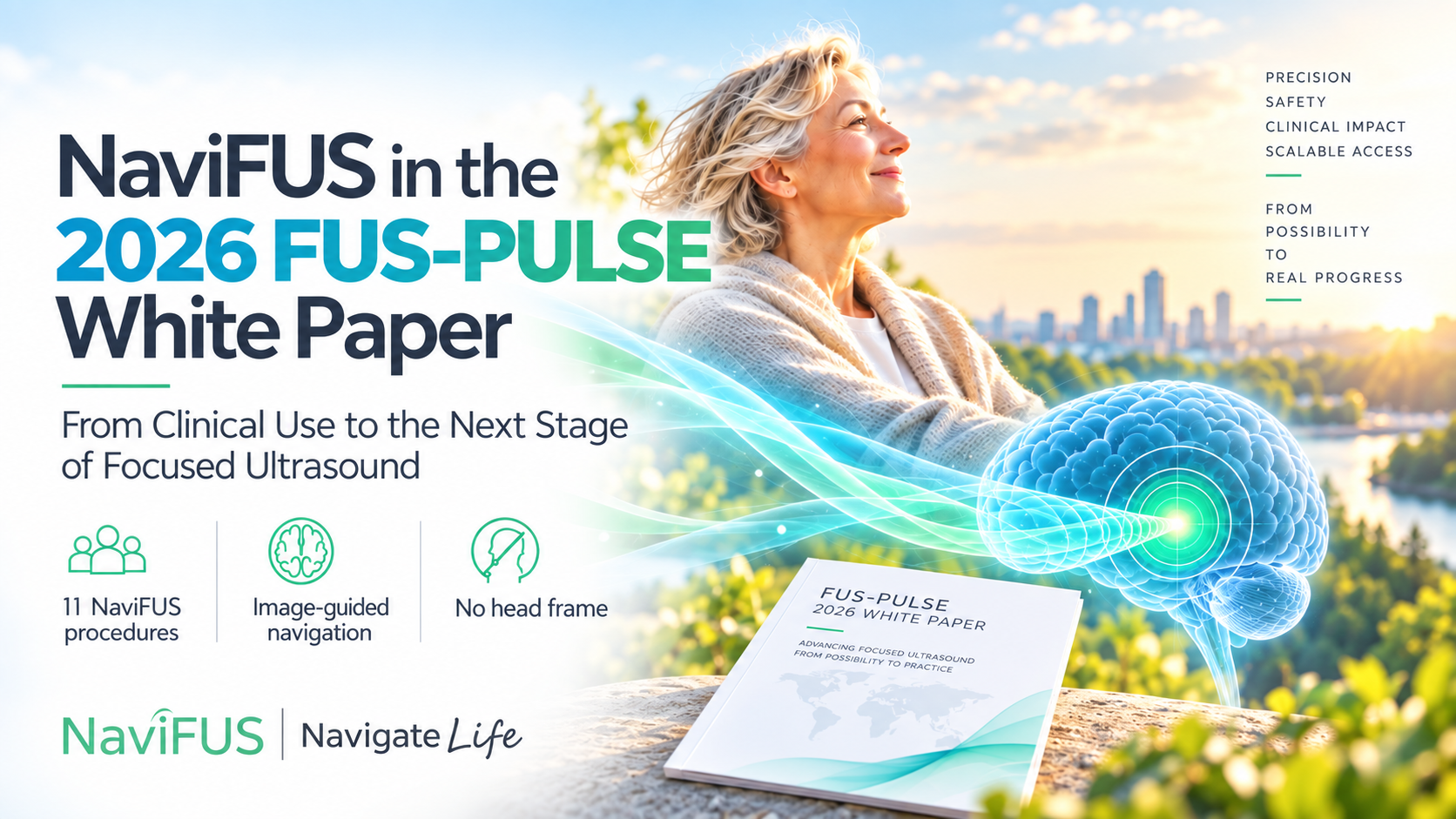
NaviFUS Featured in the 2026 FUS-PULSE White Paper: From Clinical Use to the Next Stage of Focused Ultrasound
The 2026 FUS-PULSE white paper highlights 11 NaviFUS procedures reported in the RNI clinical program, safety findings, image-guided navigation, and NaviFUS’ contribution to technical discussions on focused ultrasound neuromodulation.
Read more
From Possibility to Practicality: PBS Highlights the Next Stage of Focused Ultrasound for Brain Therapy
PBS’ Resolve to Solve highlights WVU Rockefeller Neuroscience Institute’s focused ultrasound research for addiction and a broader challenge for the field: making non-invasive brain therapy more practical, accessible, and scalable.
Read more
NaviFUS Epilepsy Clinical Study Featured by the Focused Ultrasound Foundation
The Focused Ultrasound Foundation featured NaviFUS’ recent Epilepsia publication on non-invasive focused ultrasound neuromodulation for drug-resistant epilepsy, highlighting the study’s clinical significance and continued development of the field.
Read more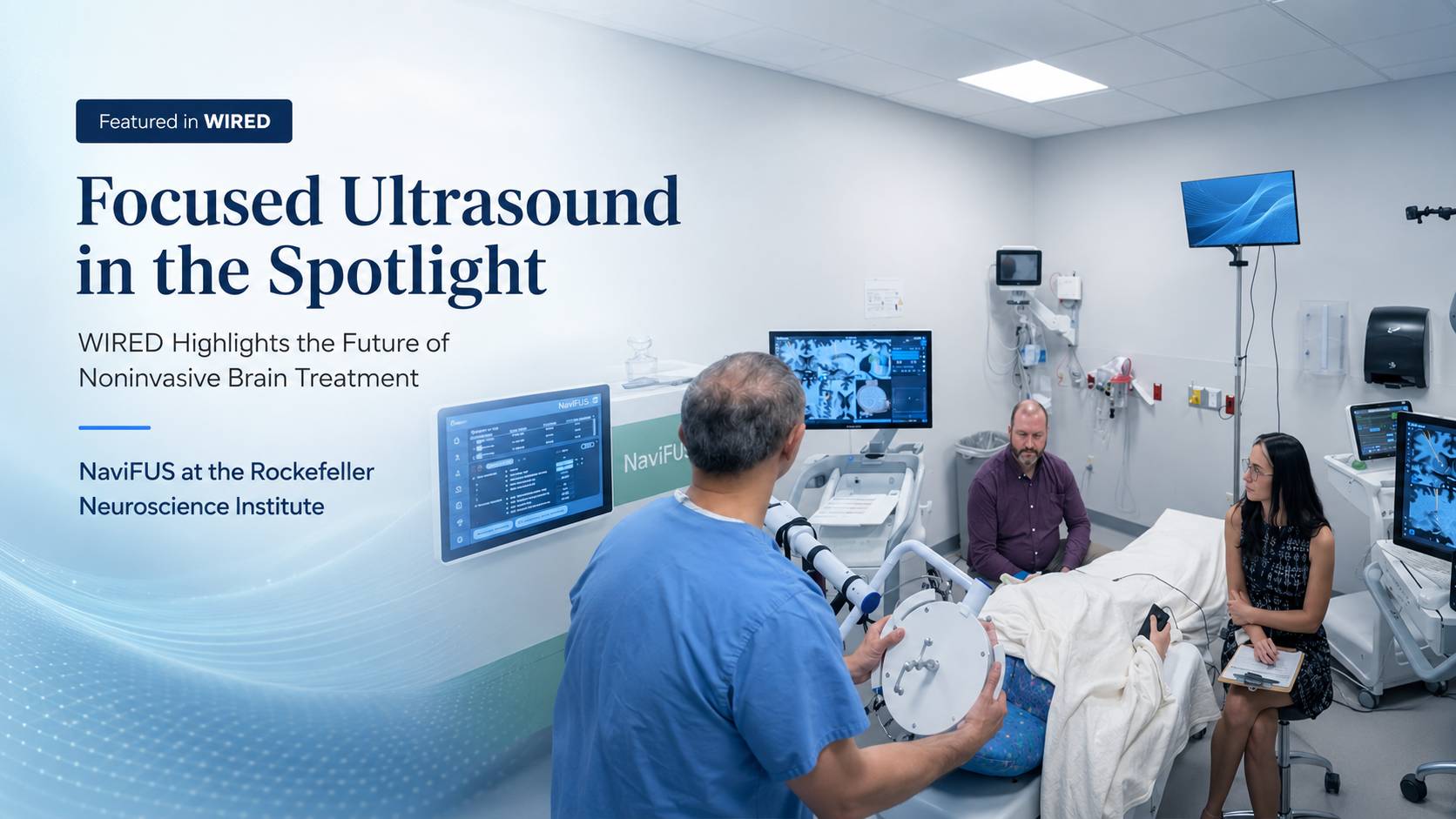
Focused Ultrasound in the Spotlight: WIRED Highlights the Future of Noninvasive Brain Treatment
Focused ultrasound is opening new possibilities for how we reach and interact with the brain — without traditional surgery. In a recent feature, WIRED explored the work of Dr. Ali Rezai and the WVU Rockefeller Neuroscience Institute (RNI), highlighting the evolving role of focused ultrasound in neurological and behavioral research.
Read more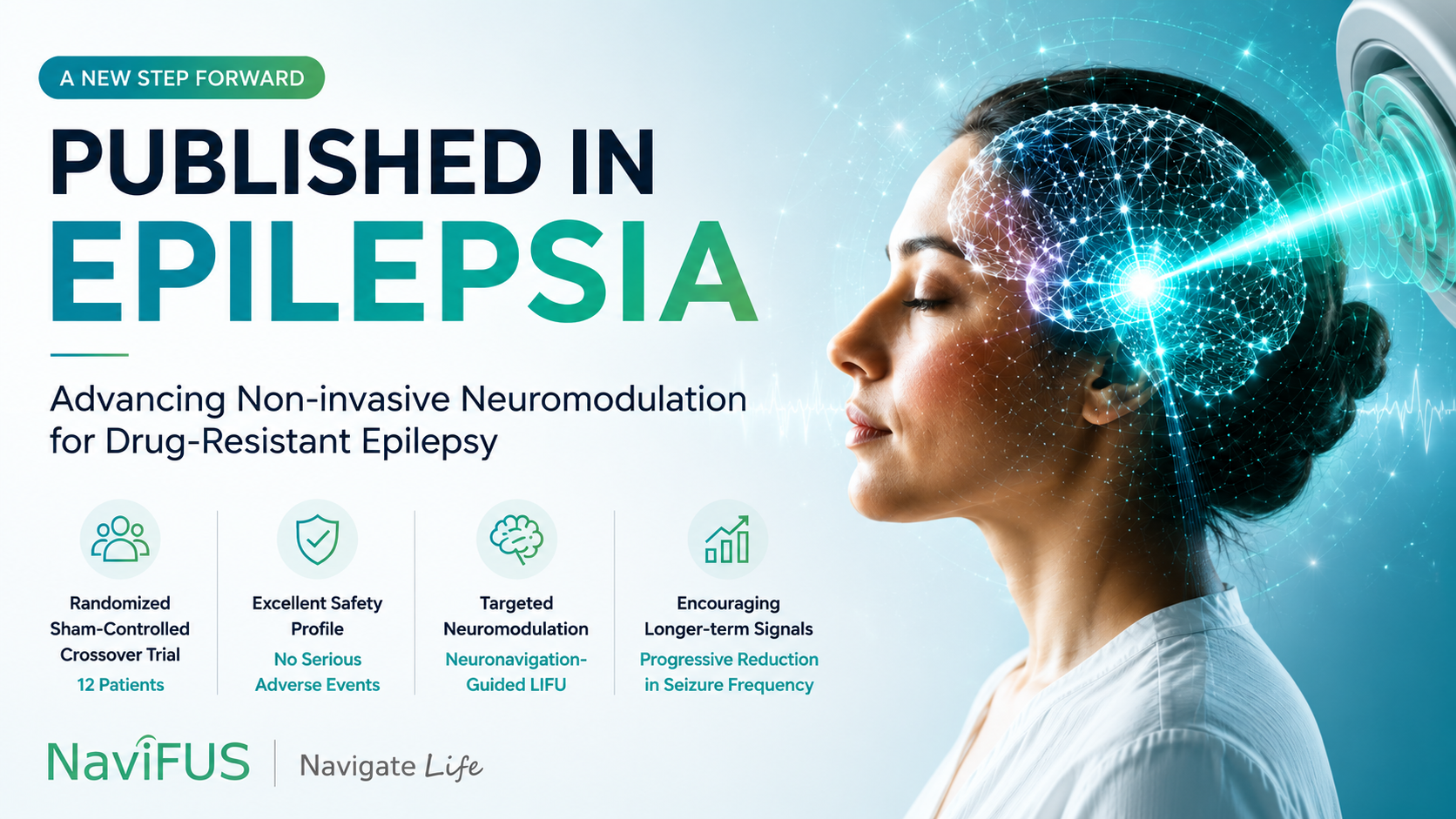
NaviFUS Clinical Trial Published in Epilepsia
NaviFUS Corporation announced the online publication of “Low-intensity focused ultrasound neuromodulation for drug-resistant epilepsy: A randomized, sham-controlled crossover trial.” Conducted at Taipei Veterans General Hospital, the pilot, single-blind study enrolled 12 adults with drug-resistant epilepsy. Each participant completed both low-intensity focused ultrasound (LIFU) and sham treatment, allowing the study to evaluate individualized targeting, preliminary safety, clinical feasibility, and efficacy signals.
Read moreSomething went wrong. Please refresh the page and/or try again.